
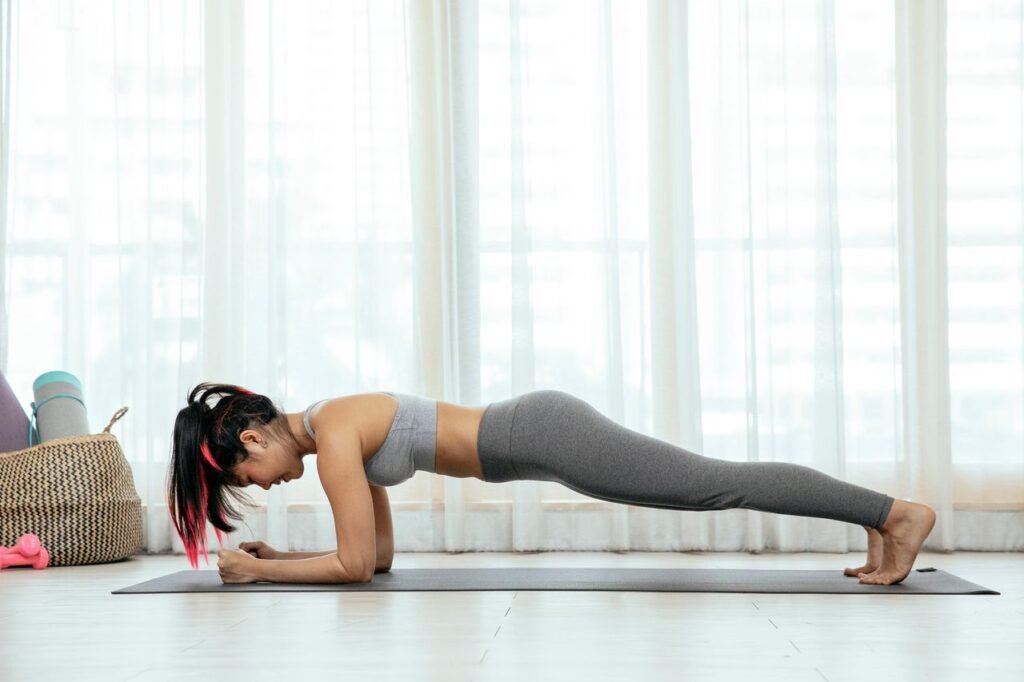
15-Minute Full-Body Workout at Home for Beginners
You don’t need a gym, expensive equipment, or hours of free time to start exercising. A simple 15-minute full-body workout at home can be a practical way for beginners to introduce regular movement into their daily routine.
The goal isn’t to exhaust yourself. Instead, focus on learning basic movements, maintaining good form, and gradually building consistency.
This beginner-friendly workout uses bodyweight exercises and can be done in a small amount of space.
Why a 15-Minute Workout Can Be Useful
Finding time to exercise can be challenging when you’re balancing work, studies, family, and other responsibilities.
A short workout can make exercise feel more manageable.
A 15-minute routine can help you:
- Build an exercise habit
- Move your body regularly
- Practice basic strength movements
- Improve general fitness
- Break up long periods of sitting
- Build confidence before progressing to longer workouts
You don’t need to spend an hour exercising for every workout to be worthwhile.
Consistency is more important than making every workout extremely long or intense.
Before You Start
Choose a clear, safe area where you can move comfortably.
You may want:
- A workout mat or comfortable surface
- Water
- Comfortable clothing
- Supportive footwear, if appropriate for the exercises
- A timer
You don’t need dumbbells or machines for this beginner routine.
If you have an injury, medical condition, or haven’t exercised for a long time, consider getting appropriate professional advice before starting a new exercise routine.
The 15-Minute Beginner Workout
The workout is divided into three parts:
3 minutes — Warm-up
10 minutes — Full-body workout
2 minutes — Cool-down
Work at a comfortable intensity and focus on controlled movements.
If an exercise causes sharp pain or unusual symptoms, stop and seek appropriate guidance.
Part 1: 3-Minute Warm-Up
A warm-up prepares your body for movement and allows you to gradually increase your activity level.
1. March in Place — 60 Seconds
Stand tall and march gently in place.
Move your arms naturally and gradually increase your pace.
Focus on:
Keeping your posture comfortable and maintaining steady breathing.
2. Arm Circles — 30 Seconds
Extend your arms comfortably and make small circles.
Gradually increase the size of the circles if it feels comfortable.
Switch directions halfway through.
3. Step Touch — 30 Seconds
Step to the right and bring your other foot toward it.
Then step to the left.
Continue moving from side to side at a comfortable pace.
4. Bodyweight Squat Practice — 60 Seconds
Stand with your feet approximately shoulder-width apart.
Lower your hips slowly and then return to standing.
Don’t worry about going very low. Focus on controlled movement and comfortable range of motion.
Part 2: 10-Minute Full-Body Workout
Complete the following five exercises.
For beginners, start with approximately 40 seconds of work followed by 20 seconds of rest for each exercise.
Complete the circuit twice.
If 40 seconds feels too difficult, reduce the work period and take more rest.
1. Bodyweight Squats
Work: 40 seconds
Rest: 20 seconds
Squats work several muscles in your lower body while also teaching an important everyday movement pattern.
How to do them:
- Stand with your feet comfortably apart.
- Keep your chest relaxed and upright.
- Bend your knees and push your hips backward.
- Lower yourself only as far as comfortable.
- Push through your feet to return to standing.
Beginner modification
Use a sturdy chair behind you as a target.
Lower yourself toward the chair and stand back up without dropping heavily onto it.
2. Wall Push-Ups
Work: 40 seconds
Rest: 20 seconds
Wall push-ups are a beginner-friendly alternative to traditional floor push-ups.
How to do them:
- Stand facing a wall.
- Place your hands against the wall around chest height.
- Step your feet slightly backward.
- Bend your elbows and bring your chest toward the wall.
- Push through your hands to return to the starting position.
Keep your body controlled throughout the movement.
Make it easier
Stand closer to the wall.
Make it harder
Move your feet farther away from the wall or progress to an incline push-up using a stable elevated surface.
3. Glute Bridges
Work: 40 seconds
Rest: 20 seconds
Glute bridges target the muscles around your hips and buttocks.
How to do them:
- Lie on your back.
- Bend your knees.
- Keep your feet flat on the floor.
- Place your arms comfortably beside you.
- Lift your hips toward the ceiling.
- Pause briefly at the top.
- Lower your hips slowly.
Focus on controlled movement rather than lifting as high as possible.
4. Bird Dog
Work: 40 seconds
Rest: 20 seconds
The bird dog is a beginner-friendly movement that challenges coordination and core stability.
How to do it:
- Start on your hands and knees.
- Keep your back in a comfortable neutral position.
- Slowly extend one arm and the opposite leg.
- Hold briefly.
- Return to the starting position.
- Switch sides.
Move slowly rather than rushing through repetitions.
Beginner modification
Move only one arm or one leg at a time until you become comfortable with the movement.
5. Marching in Place
Work: 40 seconds
Rest: 20 seconds
Finish the circuit with a simple movement that gets your body moving.
How to do it:
- Stand tall.
- Lift one knee.
- Lower it and lift the opposite knee.
- Continue alternating.
- Move your arms naturally.
Keep the pace comfortable.
Make it easier
March slowly and keep the knee lift low.
Make it harder
Increase the pace or raise your knees slightly higher if comfortable.
Repeat the Circuit
After completing all five exercises, take a short break if needed.
Then repeat:
- Squats
- Wall push-ups
- Glute bridges
- Bird dogs
- Marching in place
Remember that the goal for beginners is not to perform as many repetitions as possible.
Focus on good technique and controlled movement.
Part 3: 2-Minute Cool-Down
After finishing your workout, gradually slow down.
1. Slow Walking — 60 Seconds
Walk slowly around the room or march gently in place.
Allow your breathing to gradually return toward normal.
2. Gentle Stretching — 60 Seconds
Perform a few comfortable stretches for the muscles you used during the workout.
You can gently stretch your:
- Legs
- Hips
- Chest
- Shoulders
- Back
Avoid forcing a stretch or bouncing during it.
Complete 15-Minute Workout at a Glance
| Exercise | Time |
|---|---|
| Warm-up | 3 minutes |
| Squats | 40 sec |
| Rest | 20 sec |
| Wall push-ups | 40 sec |
| Rest | 20 sec |
| Glute bridges | 40 sec |
| Rest | 20 sec |
| Bird dogs | 40 sec |
| Rest | 20 sec |
| Marching in place | 40 sec |
| Rest | 20 sec |
| Repeat circuit | 5 minutes |
| Cool-down | 2 minutes |
The exact timing doesn’t need to be perfect. If you’re completely new to exercise, take additional rest whenever necessary.
How Often Should Beginners Do This Workout?
Start with a schedule that you can realistically maintain.
For example:
Monday: 15-minute workout
Tuesday: Easy walking or rest
Wednesday: 15-minute workout
Thursday: Easy movement or rest
Friday: 15-minute workout
Weekend: Walking, recreational activity, or rest
You can adjust this schedule according to your fitness level and lifestyle.
You don’t need to exercise intensely every day.
How to Progress Over Time
Once the workout becomes comfortable, gradually increase the challenge.
You could:
- Increase the work period.
- Reduce rest slightly.
- Add another round.
- Perform more controlled repetitions.
- Progress from wall push-ups to incline push-ups.
- Progress from easier squats to regular bodyweight squats.
- Add light resistance training.
Progress gradually rather than trying to make large changes all at once.
Beginner-Friendly Modifications
Everyone starts at a different fitness level.
If an exercise is too difficult, modify it.
Instead of regular squats:
Try chair-assisted squats.
Instead of floor push-ups:
Try wall push-ups.
Instead of jumping:
March in place.
Instead of long workout periods:
Use shorter work intervals.
Instead of completing the entire circuit:
Start with one round.
A modified workout is still a workout.
Common Beginner Mistakes
1. Starting Too Fast
Trying to exercise at maximum intensity from your first session can make the workout unnecessarily difficult.
Start comfortably and build gradually.
2. Ignoring Technique
Doing an exercise quickly doesn’t necessarily make it more effective.
Prioritize controlled movements and appropriate range of motion.
3. Comparing Yourself to Others
Someone who has been training for years will naturally perform differently from someone who is just beginning.
Focus on your own progress.
4. Not Taking Rest
Rest is part of a sustainable exercise routine.
If you feel excessively tired, take a break or reduce the intensity.
5. Expecting Immediate Results
Fitness develops through consistent effort.
Focus on completing your workouts regularly rather than expecting dramatic changes after a few sessions.
What Should You Do After Your Workout?
After exercising, drink water and return to your normal daily activities.
If you’re hungry, choose a balanced meal or snack containing nutritious foods and a source of protein.
You don’t need a complicated post-workout routine.
Your overall eating, activity, sleep, and recovery habits matter more than one specific meal or exercise session.
Frequently Asked Questions
Can beginners really get a workout in 15 minutes?
Yes. A short workout can provide a practical way to include regular physical activity in your day. The intensity and exercises can be adjusted to your fitness level.
Do I need equipment?
No. This workout is designed around bodyweight movements. As you progress, you can add resistance bands, dumbbells, or other equipment if you want additional challenges.
Can I do this workout every day?
You can include daily movement, but you don’t necessarily need to perform the same full-body workout every day. Allow your body appropriate recovery and vary your activities.
What if I can’t complete the whole workout?
That’s completely fine. Start with one round or shorter work periods and gradually build your capacity.
Can I lose weight with a 15-minute workout?
Exercise can contribute to an active lifestyle, but body-weight changes depend on multiple factors, including overall food intake, physical activity, sleep, and individual circumstances. A short workout can still be a useful part of a broader healthy lifestyle.
Is this workout suitable for older adults?
Some of these movements may be adaptable for older adults, but fitness levels and health conditions vary considerably. Anyone with specific health concerns should consider appropriate professional guidance before starting a new exercise routine.
Final Thoughts
You don’t need a gym membership or a complicated workout plan to start exercising.
This 15-minute full-body workout for beginners gives you a simple starting point using basic bodyweight movements. Start at a comfortable level, focus on technique, take breaks when needed, and gradually increase the challenge as you become more comfortable.
The most important step is often the simplest one:
Start moving and keep going.
A short workout that you can consistently fit into your day can be more practical than a complicated routine you rarely complete.